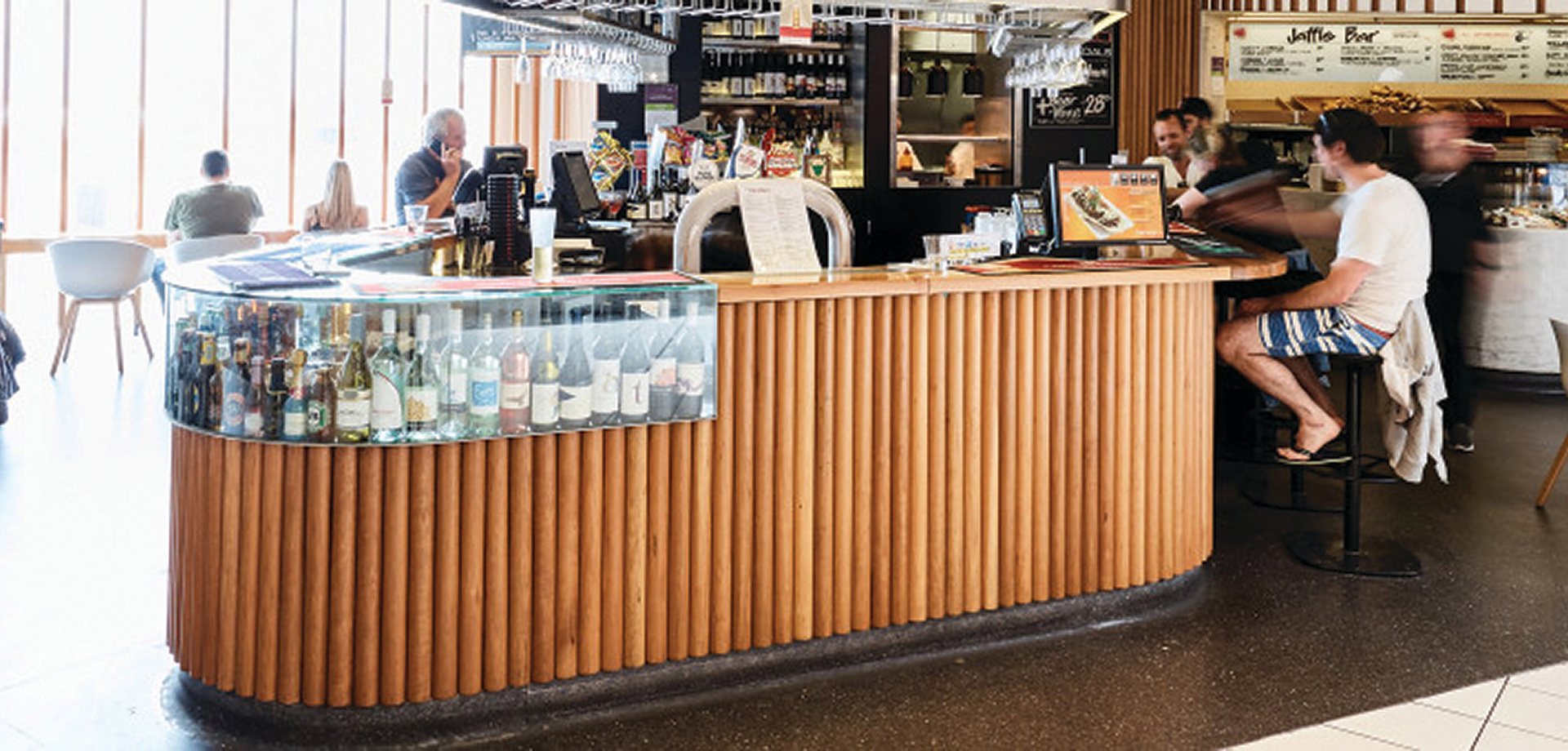
Victorian Ash is similar to Tasmanian Oak.
Victorian Ash is the trade name for two of the tallest hardwood species in the world, Mountain Ash and Alpine Ash. These species are indigenous to Victoria, southern NSW and parts of Tasmania.
Victorian Ash timber usually has a straight grain but may also produce fiddleback markings and have visible gum veins. It has a coarse texture. The heartwood ranges from pale pink to yellowish brown and a walnut colour can be achieved by steaming with ammonia. The heartwood is often indistinguishable in colour from the softwood. There is minimal shrinkage after drying. To ensure good quality boards, logs are quarter-cut, providing excellent dimensional stability.
While Victorian Ash can be used for general construction, such as framing, its low to moderate durability means it is best suited for interior applications such as flooring, panelling and high value joinery and furniture.
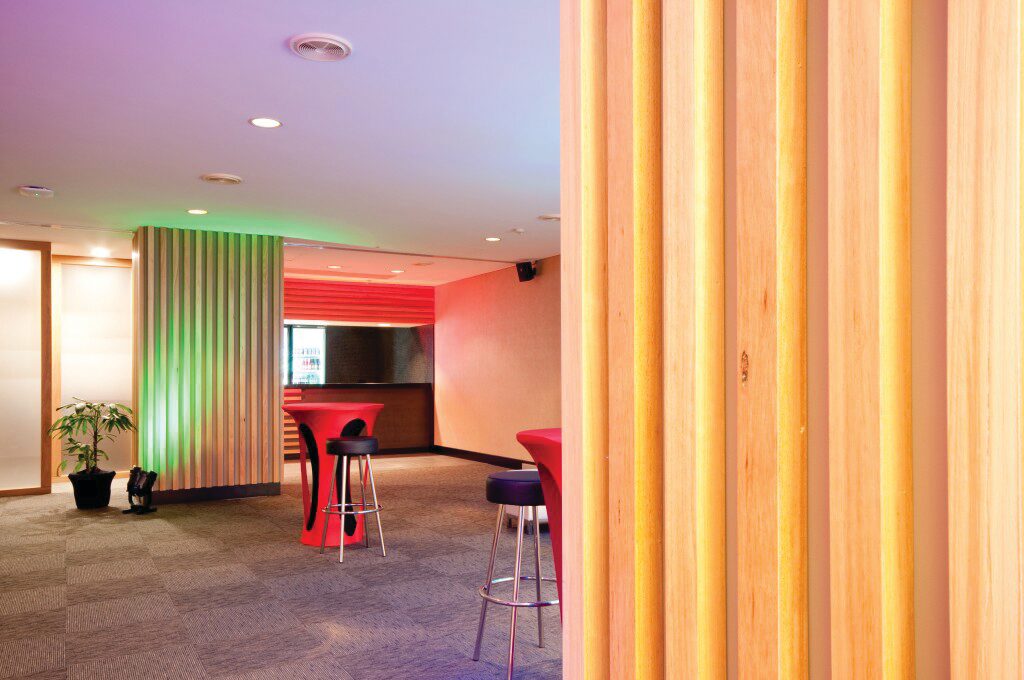
Look & features
Moderately coarse texture and predominately straight grain
Botanical name
Eucalyptus delegatensis
Colour
Pale pink to pale yellow or brownish colour
Common uses
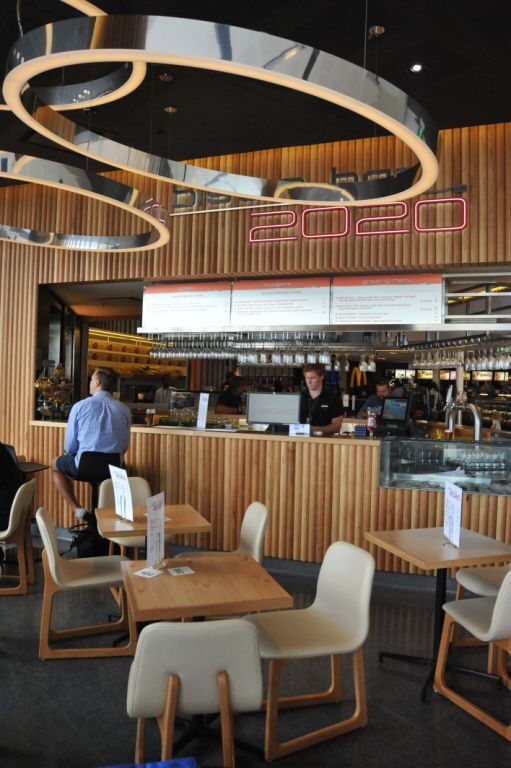
Protected structural applications, flooring, panelling and bespoke joinery
Properties
| Density (kg/m3) | |
|---|---|
| GD | 1050 |
| ADD | 660 |
| Hardness kN (janka) | |
|---|---|
| Green | 4.0 |
| Dry | 4.9 |
| Durability Class | 3 |
| Strength Group | S4/SD4 |
| Joint Group | J3/JD3 |
| Shrinkage | |
|---|---|
| Radial % (approx.) | >5.0 |
| Tangential % (approx.) | 8.5 |
| Structural Grades | |
|---|---|
| Unseasoned | F5/F7/F8/F11/F14 |
| Seasoned | F17/F22 |
| Early Fire Hazard Indices | |
|---|---|
| Ignitability | 14 |
| Spread of Flame | 8 |
| Smoke Development | 3 |
| Termite Resistant (to AS3660) | NR |
| Lyctid Susceptible Sapwood | S-TAS, NSW, NS-VIC |